
Turn Physician Feedback
Into Leadership Insights
Build an executive-level workforce profile that helps guide organizational decisions.
Schedule a
Conversation with
Chris Palmeiro, DO, MSc
Chief Strategy Officer
Endocrinologist

Schedule a
Conversation with
Josh Marler, MS
Vice President, Program Development
Former Cardiology Administrator

Understand Workforce Risk
Before It Becomes a Vacancy

Identify Workforce Vulnerabilities
Recognize emerging risks before they affect program stability.

Support Succession Planning
Anticipate changes in physician capacity and career horizon.

Prioritize Organizational Interventions
Identify where targeted action may have the greatest impact.

Measure Longitudinal Change
Repeat the assessment over time to evaluate whether interventions are producing meaningful organizational outcomes.
See What Leadership Receives
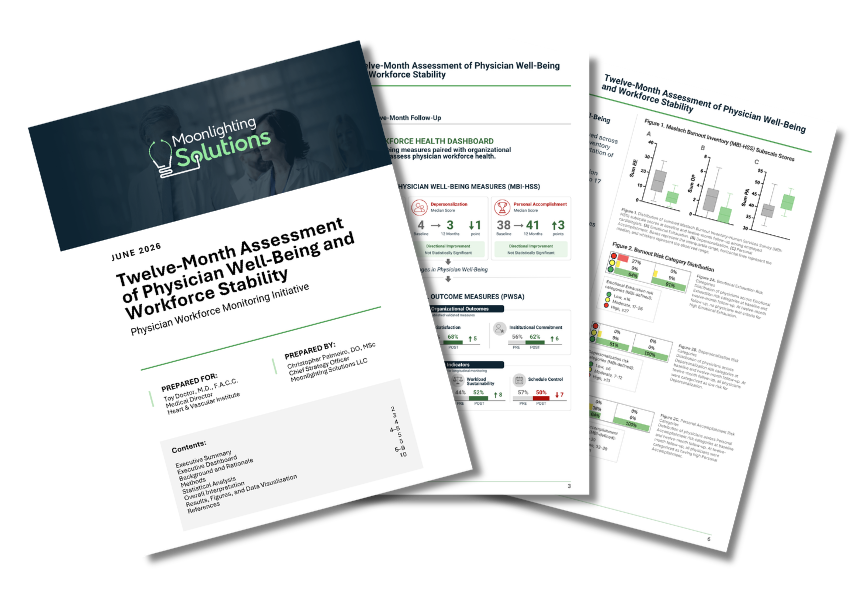
Preview the Executive Report
See how physician feedback is translated into an executive-level view of workforce vulnerabilities, priorities, and opportunities for action.
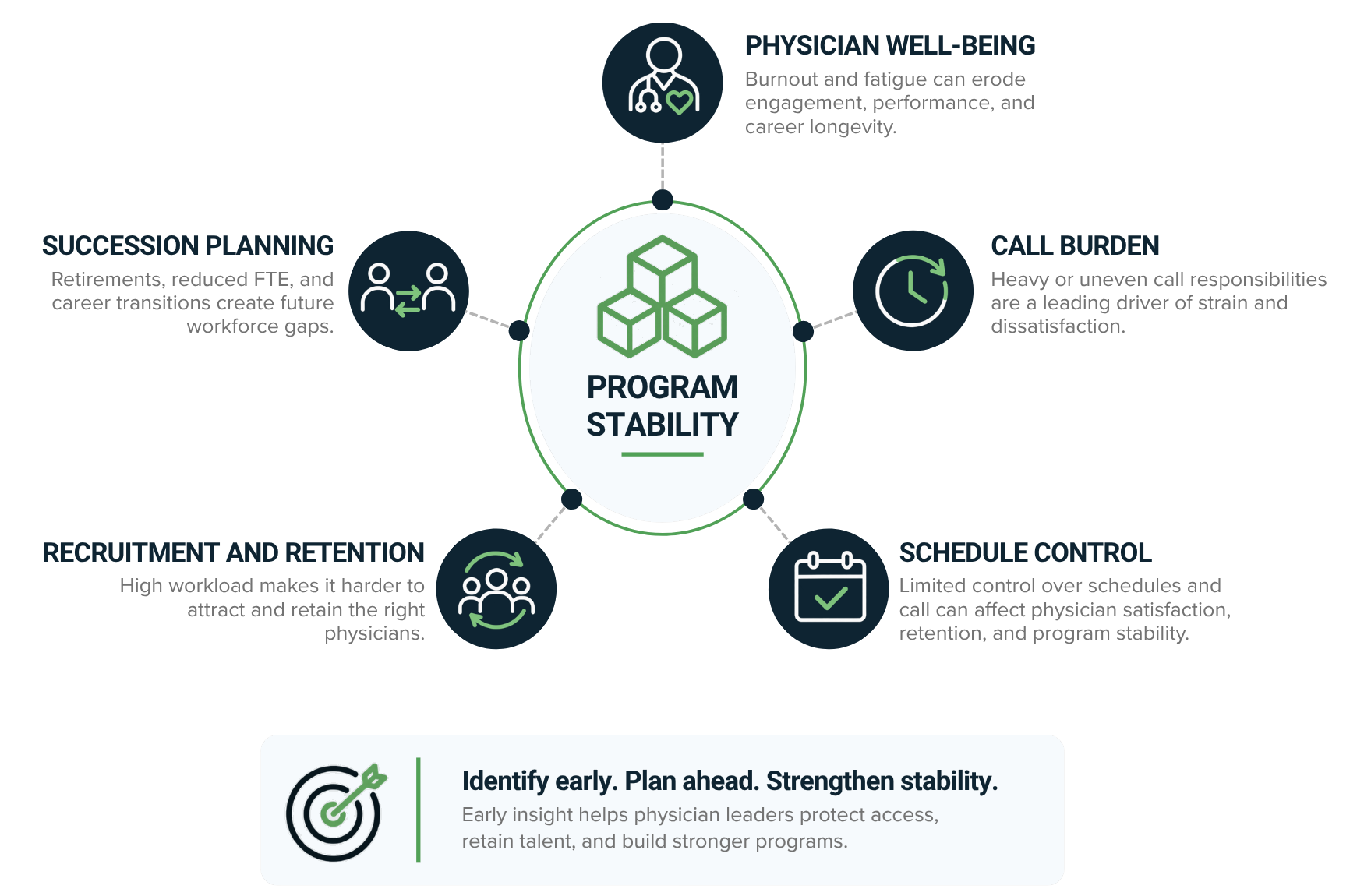
Early Signs of Workforce Instability
Are Easy to Miss
Changes in physician well-being, call burden, career plans, and clinical capacity can signal emerging workforce vulnerabilities before they become visible through vacancies or turnover.
A More Complete View
Of Your Physician Workforce
The Physician Workforce Assessment combines two complementary perspectives to identify emerging workforce vulnerabilities and inform organizational planning.
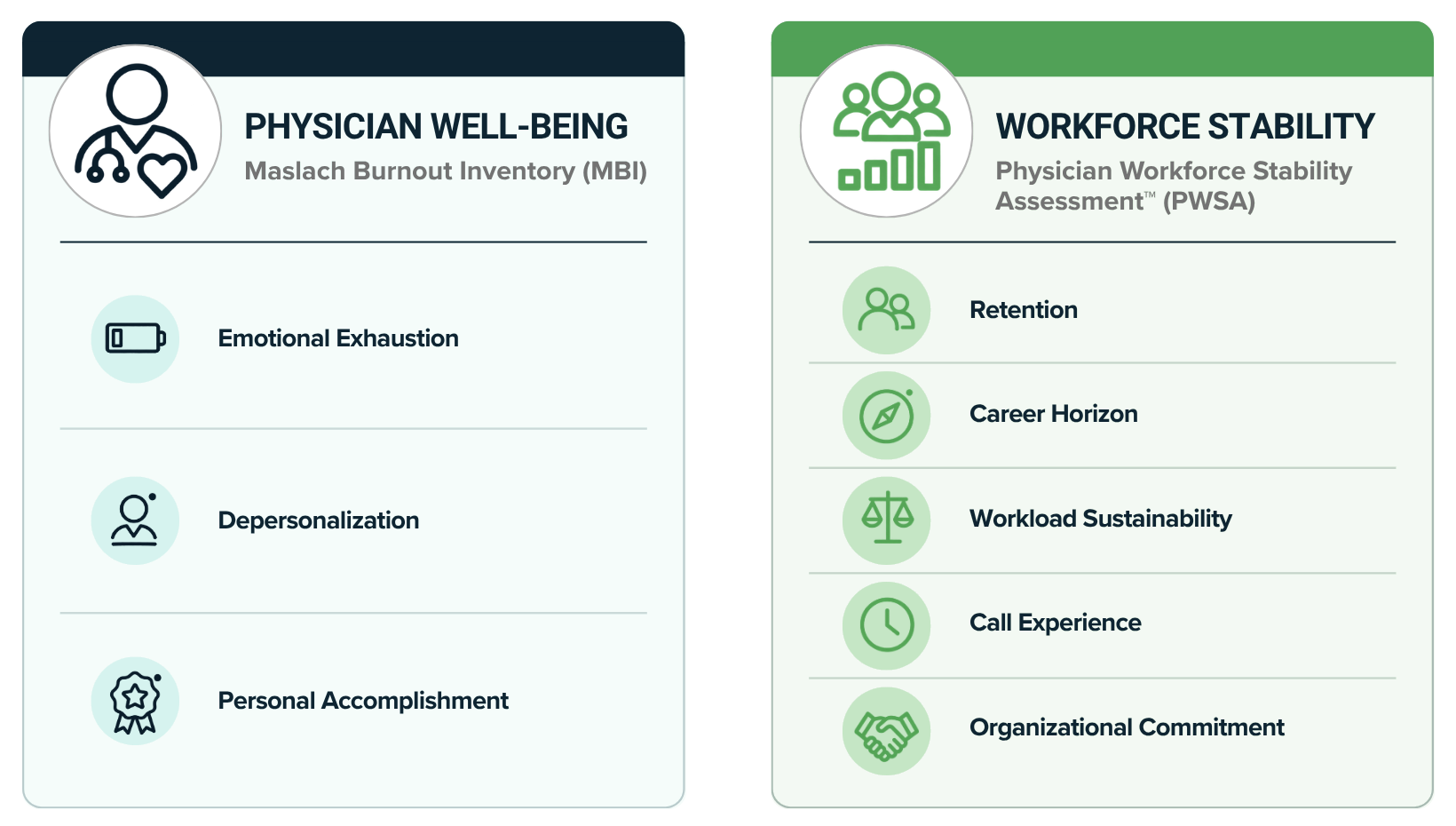
Together, these measures turn physician experience into actionable workforce insight.
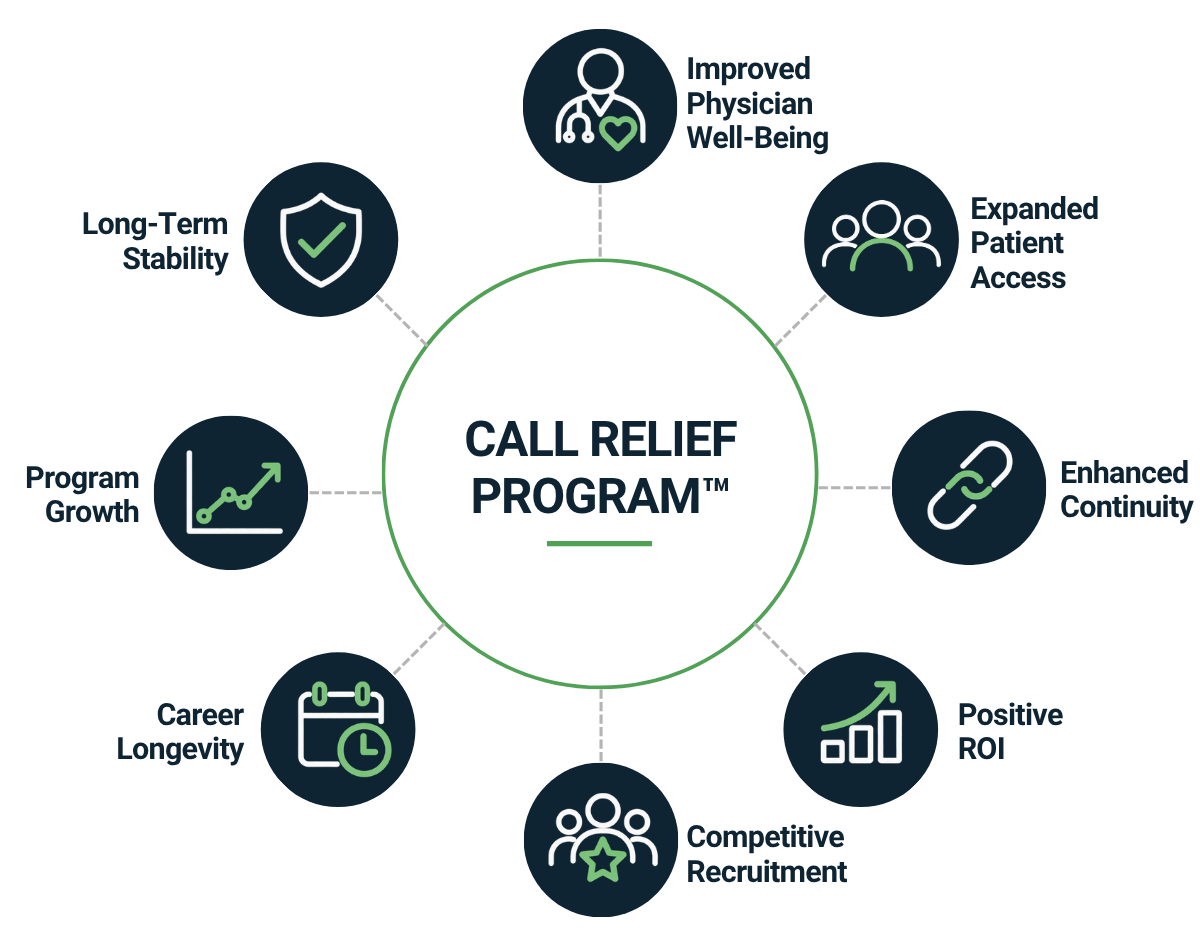
When Call Becomes
A Workforce Strategy
Every organization will identify different priorities. When call burden emerges as a contributor to physician strain or workforce instability, a Call Relief Program™ may be one targeted intervention.
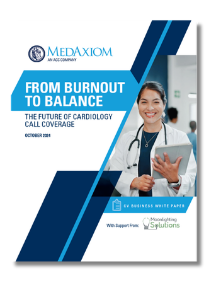
See Call Relief in Practice
Explore real-world case studies showing how cardiology programs have redesigned call coverage to address physician burnout.
Case Study: Centra Heart &
Vascular Institute
To address increasing weekend call burden and declining outpatient capacity, Centra implemented a Call Relief Program™ designed to reduce internal call burden while strengthening physician well-being and expanding patient access.One year later, the program demonstrated measurable workforce and operational outcomes.
PROGRAM IMPACT

+60
Clinic Days
Returned

0
Physician
Turnover

73%
Reported Call Relief
Increased Their
Likelihood of Remaining

~20%
Practice Growth
Following
Implementation

Explore Centra’s Workforce Outcomes
Go beyond the headline results. Review the full abstract to see how physician well-being and workforce stability changed following implementation of the Call Relief Program™.
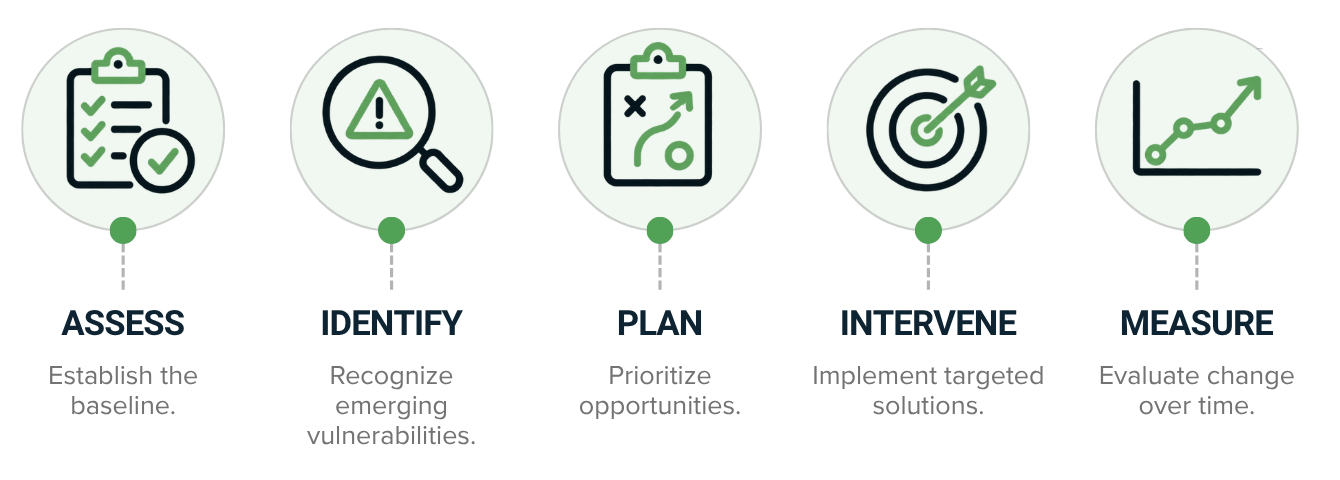
From Assessment to Action
The goal of the Physician Workforce Assessment is not simply to measure physician sentiment. It is to create a framework for organizational improvement.
How Stable Is Your Cardiology Program?
Understanding workforce risk starts with understanding the physicians behind the program.